
What is ODS-E?
ODS-E (Open Data Schema for Energy) is an open standard for normalizing asset-level distributed energy telemetry across OEM platforms.
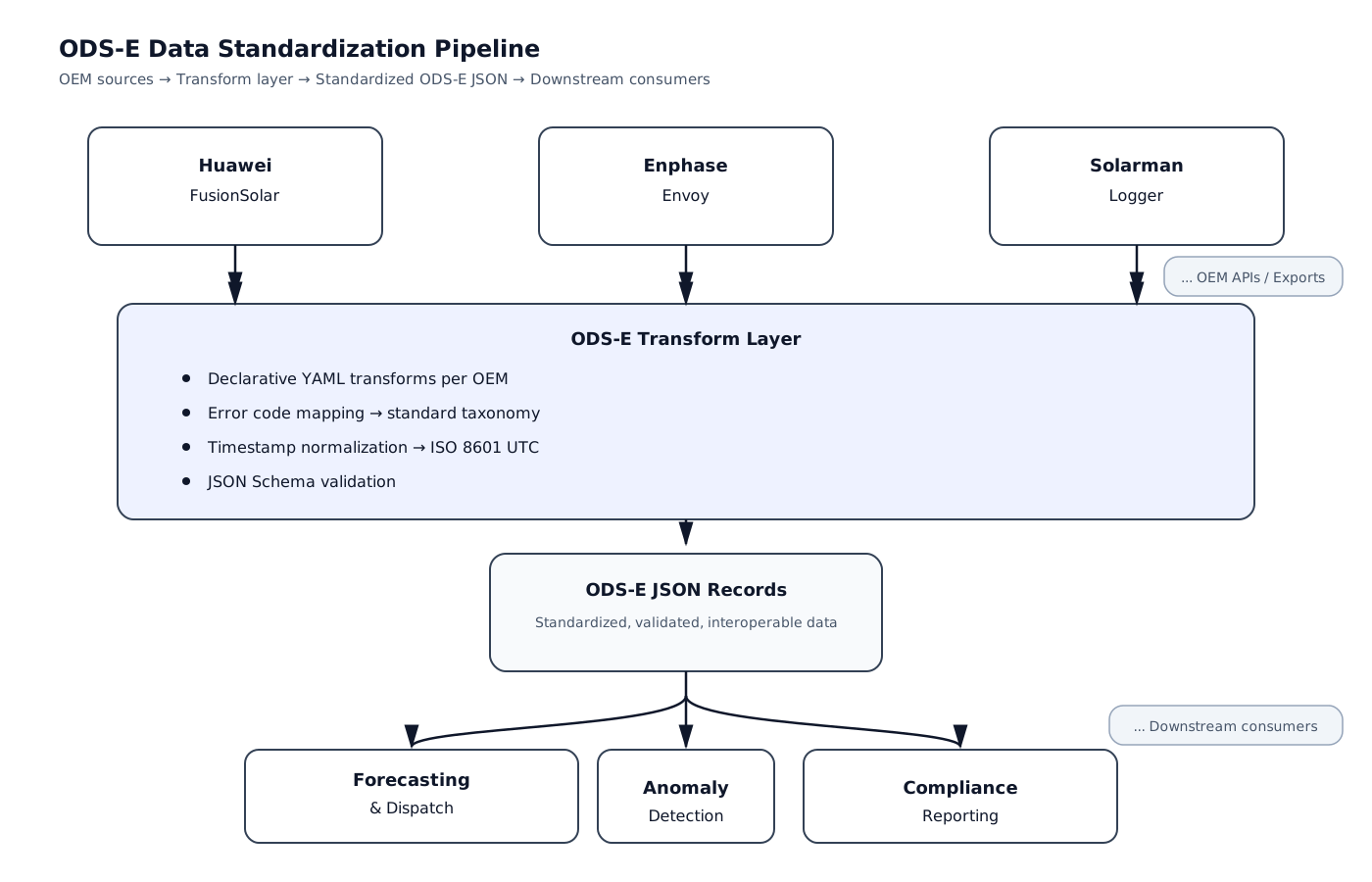
It gives operators, integrators, and utilities a shared data model so telemetry from Huawei, Enphase, Solarman, and other systems can be transformed into one consistent schema for analysis, validation, and reporting.
Scope: Asset-Level First
ODS-E is specifically designed for asset-level telemetry — the interval-by-interval energy, power, and status data produced by individual inverters, meters, batteries, and other DER devices. Each ODS-E record represents a single asset at a point in time.
This is a deliberate starting point, not a ceiling. The long-term goal is to support aggregation of asset-level records upward into fleet, site, and grid-scale representations — enabling VPP dispatch, utility forecasting, and interoperability with grid-scale standards such as IEEE 2030.5, OpenADR, and CIM. Asset-level data quality is the prerequisite for that integration to be trustworthy.
Why It Exists
Energy data is fragmented across vendor-specific APIs, file formats, and error taxonomies.
ODS-E removes that fragmentation by defining:
- A common JSON schema for energy records
- A normalized error taxonomy for cross-OEM fault interpretation
- A transform layer to convert OEM-native payloads into ODS-E records
Core Building Blocks
1. Schema
A minimal, machine-validatable record format with required fields such as timestamp, energy, and error classification.
{
  "timestamp": "2026-02-05T14:00:00Z",
  "kWh": 847.5,
  "error_type": "normal",
  "PF": 0.98
}
2. Transforms
Declarative mappings that convert OEM exports and APIs into ODS-E-compliant records.
3. Validation
Schema and semantic checks that ensure records are structurally valid and operationally meaningful.
Who Uses ODS-E
- IPP operators managing multi-site, multi-OEM portfolios
- ESCO and O&M teams building standardized monitoring pipelines
- Utilities ingesting DER production data for forecasting and dispatch
- Analysts, insurers, and finance teams requiring comparable energy datasets
What You Can Do Next
- Read Getting Started to install and run your first transform
- Explore Schema Reference for field-level definitions
- Check Supported OEMs for current transform coverage
- Review Validation for schema and semantic checks